
Vittorio Micheli — Sarcoma Cure at Lourdes (1963, recognized 1976)
The story in one line
Vittorio Micheli experienced a Lourdes cure later judged medically unexplained.
The basic story
Vittorio Micheli's recovery from a destructive pelvic sarcoma after a Lourdes pilgrimage was later discussed in medical literature and recognized by Catholic authorities in 1976 as a Lourdes miracle.
Historical setting
Vittorio Micheli's case belongs to the modern Lourdes cure record, where severe bone disease, pilgrimage, and later medical review all entered the public file.
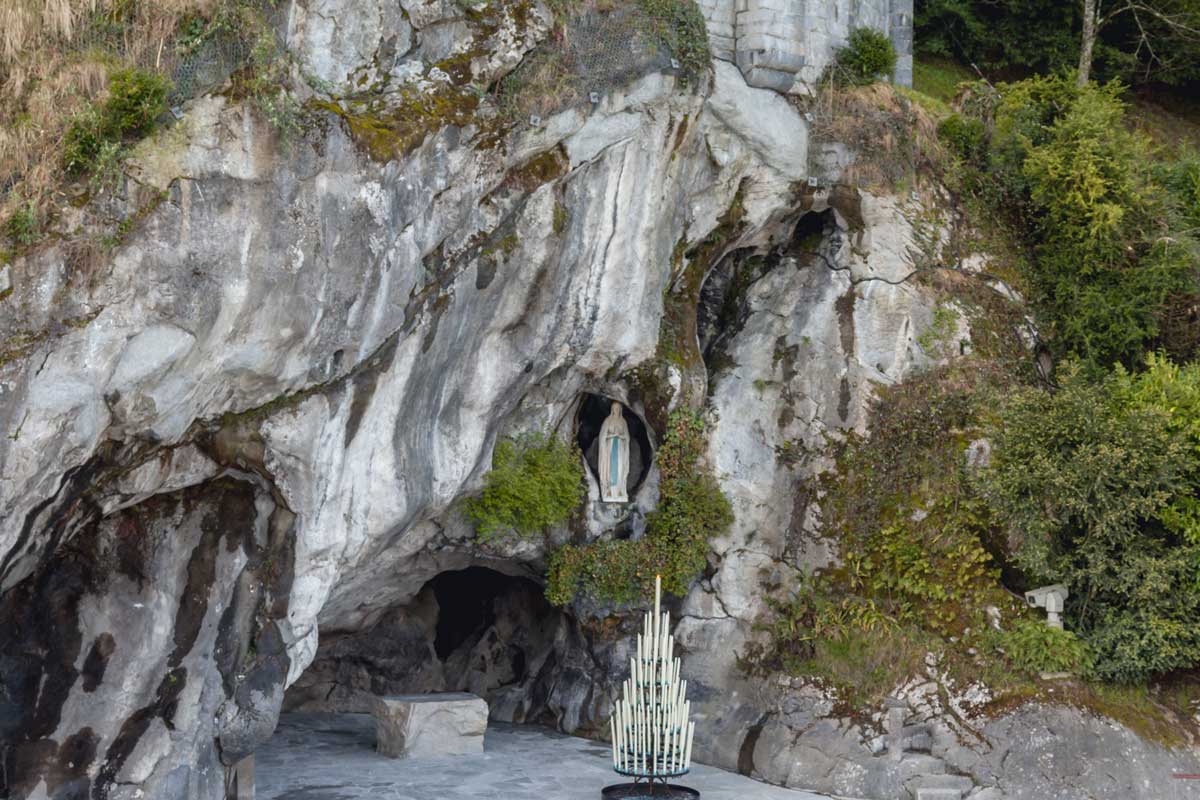
Pilgrimage
May 1963
The published case report says Micheli arrived at Lourdes immobilized in a full cast.
Condition in the file
Destructive pelvic sarcoma
The article describes severe osteolysis of the left ilium and acetabulum.
Medical reviews
1969 and 1971
The International Medical Committee reviewed the case years after the reported cure.
Recognition
May 26, 1976
The Lourdes sanctuary lists Micheli as the 63rd officially recognized miracle.
The story
Section titled “The story”Vittorio Micheli developed a destructive sarcoma involving the left side of his pelvis while serving in the Italian Army.[1] The case report describes progressive osteolysis of the ilium and acetabulum, increasing deformity, and eventual near-total destruction of the left hemipelvis, leaving the leg functionally detached except for soft tissue support.[1]
By the time he traveled to Lourdes in May 1963, Micheli was in a full cast, dependent on pain medication, and unable to move the leg normally.[1] After the pilgrimage, his pain reportedly ceased and later imaging showed reconstitution of the destroyed bone structures.[1]
The case was eventually recognized by Catholic authorities in 1976 as one of the official miracles of Lourdes.[2]
Primary-source file
Section titled “Primary-source file”The Linacre Quarterly article reproduces the medical narrative, radiographic changes, committee review dates, and long-term follow-up.
pmc.ncbi.nlm.nih.gov Indexed medical record PubMed entry for the Micheli articleThe PubMed record anchors the published article in the medical literature and links the case to its journal record.
pubmed.ncbi.nlm.nih.gov Official sanctuary record Miraculous healings at LourdesThe sanctuary list identifies Micheli as the 63rd recognized miracle and gives the 1976 recognition date.
lourdes-france.orgWhat doctors actually reviewed
Section titled “What doctors actually reviewed”The Micheli case is one of the Lourdes cures where readers can see a real medical article instead of only a short miracle notice.[1]
That article says the doctors had several kinds of evidence in front of them:
- radiographs showing progressive destruction of the left ilium and acetabulum[1]
- a biopsy of the left gluteal region showing sarcomatous cells[1]
- later follow-up films showing reconstitution of the damaged pelvic structures[1]
- long-term surveillance checking whether the disease came back or metastasized[1]
That is why Micheli’s case is medically easier to picture than some Lourdes files. The published record is not just, “he felt better after prayer.” It is, “doctors had destructive films and pathology first, then later films and follow-up showing a pelvis that had rebuilt enough for normal life.”
Publicly documented chronology
Section titled “Publicly documented chronology”The published case report gives unusually concrete before-and-after detail for a Lourdes file.[1]
- Micheli arrived in Lourdes on a stretcher and was immersed in the baths while still wearing his cast.[1]
- He said that from the moment of immersion he felt hungry and no longer needed sedatives or analgesics.[1]
- Over the following months, mobility returned; once the cast was removed in February 1964, he found that the leg functioned again.[1]
- Radiographs from 1964 onward documented that the bone had been reconstituted and that the acetabular region had re-formed sufficiently for normal life, even if not with perfectly ordinary anatomy.[1]
The case concerns a visible destructive lesion rather than a purely symptomatic disorder.
What the medical review said
Section titled “What the medical review said”The cited sources describe:
- a severe organic pathology
- a dramatic change after pilgrimage
- long-term follow-up
- later discussion in peer-reviewed medical literature[1]
The peer-reviewed case report says the International Medical Committee did not rely on a quick impression. The case returned for review in 1969 and 1971, after enough time had passed to see whether the recovery would hold and whether the tumor would recur.[1]
The published medical conclusion is direct:
What doctors said they found afterward
Section titled “What doctors said they found afterward”The same article says the later examinations did not show a merely subjective improvement. They showed a patient who could walk, work, and live normally again, while years of follow-up found no local recurrence or metastasis.[1]
So the public medical reasoning here is straightforward:
- the original disease was documented on films and biopsy[1]
- later films showed objective skeletal reconstruction[1]
- years of follow-up did not reveal a return of the sarcoma[1]
Only after that longer review did the sanctuary register the later ecclesial recognition in 1976.[2]
References
Section titled “References”- Neilan, B.A. (2013). “The Miraculous Cure of a Sarcoma of the Pelvis: Cure of Vittorio Micheli at Lourdes.” Linacre Quarterly, 80(3), 277–281. Available via PubMed/PMC at: https://pubmed.ncbi.nlm.nih.gov/30083003/ and https://pmc.ncbi.nlm.nih.gov/articles/PMC6027009/
- Sanctuary of Our Lady of Lourdes. “Miraculous healings.” Official sanctuary list identifying Vittorio Micheli as the 63rd recognized miracle of Lourdes, recognized on May 26, 1976. Available at: https://www.lourdes-france.org/en/miraculous-healings/