
Our Lady of Good Health, Vailankanni
The story in one line
Marian apparitions and interventions took place at Vailankanni and helped establish the shrine’s healing tradition.
The basic story
The Marian shrine at Vailankanni in Tamil Nadu is built around several apparition and rescue traditions: a milk-boy vision, the healing of a lame buttermilk boy, and the deliverance of Portuguese sailors from a storm. It became one of the great healing shrines of Asia.
Reported message
Historical setting
Vailankanni stands in the long history of Catholicism on India's southeast coast, where local healing stories and later shrine development created a major pilgrimage center.
Place
Vailankanni, Tamil Nadu
The basilica’s own pages present Vailankanni as one of Asia’s major Marian healing shrines on the Bay of Bengal coast.
Core traditions
3 linked miracle stories
The shrine preserves the milk-boy vision, the healing of the buttermilk boy, and the rescue of Portuguese sailors.
Shrine growth
Parish in 1771; minor basilica in 1962
The official chronology records later canonical and architectural milestones built on the older traditions.
Public profile
Healing pilgrimage site
The basilica presents vows, thanksgiving offerings, and cross-religious pilgrimage as part of the living shrine record.
Primary-source file
Section titled “Primary-source file”Official timeline covering the apparition traditions, parish status, basilica status, and later shrine milestones.
vailankanni.info Official shrine history History of VelankanniOfficial summary of the milk-boy, buttermilk boy, and Portuguese sailors traditions.
vailankanni.info Official apparition page Apparitions of Our Lady of HealthOfficial shrine retelling of the three core stories with more scene-by-scene detail about the milk boy, the buttermilk boy, and the Portuguese sailors.
vailankanni.info Official shrine devotion page Velankanni Shrine MiraclesOfficial page presenting the sanctuary’s healing and thanksgiving tradition.
vailankanni.infoThe core historical tradition
Section titled “The core historical tradition”The shrine and parish pages describe Vailankanni as a Marian shrine in Asia and use the title “Lourdes of the East.”[1] [2]
The shrine’s identity is built around three linked stories rather than one isolated apparition dossier.[1] [2] [3]
In the first story, a Hindu milk boy was carrying milk to a customer’s house when he stopped to rest under a banyan tree near a tank. The shrine page says Mary appeared there with the child Jesus and asked for milk for her Son. The boy gave some of the milk away, then worried because he would arrive late and with less to deliver. But when he reached the customer, the pot was said to be still full. The customer then returned with the boy to the pond, where the shrine says Mary appeared again. The place came to be called Matha Kulam, or Our Lady’s tank.[3]
The second story moves a short distance away and a little later in time. A lame boy selling buttermilk on the outskirts of Vailankanni was asked by the same Lady for buttermilk for her child. The official shrine account says she then told the boy to go to a wealthy Catholic in nearby Nagapattinam and report what he had seen. Only after setting out did he realize that he had been healed and could now walk. The same page adds that the Catholic man had already received a vision the previous night telling him to build a chapel, so he and the cured boy returned together to the site, where Mary appeared to both. A thatched chapel was then built there, and the shrine says this is where the title Mother of Good Health or Arokia Matha took root.[2] [3]
The third story is maritime rather than village-based. Some years later, Portuguese merchant sailors were caught in a violent storm in the Bay of Bengal. The shrine says they were saved through Mary’s help, reached the Vailankanni shore safely, and were taken by local fishermen to the chapel already standing there. In thanksgiving they later built a more permanent structure and, on later visits, enlarged it further. The shrine links their safe landing with September 8, the feast of the Nativity of Mary, and presents that rescue as one of the key reasons the local chapel became a larger church and then an international pilgrimage center.[1] [3]
The shrine chronology links the site’s identity to this whole sequence rather than to a single tightly dated apparition investigation.[1] [2]
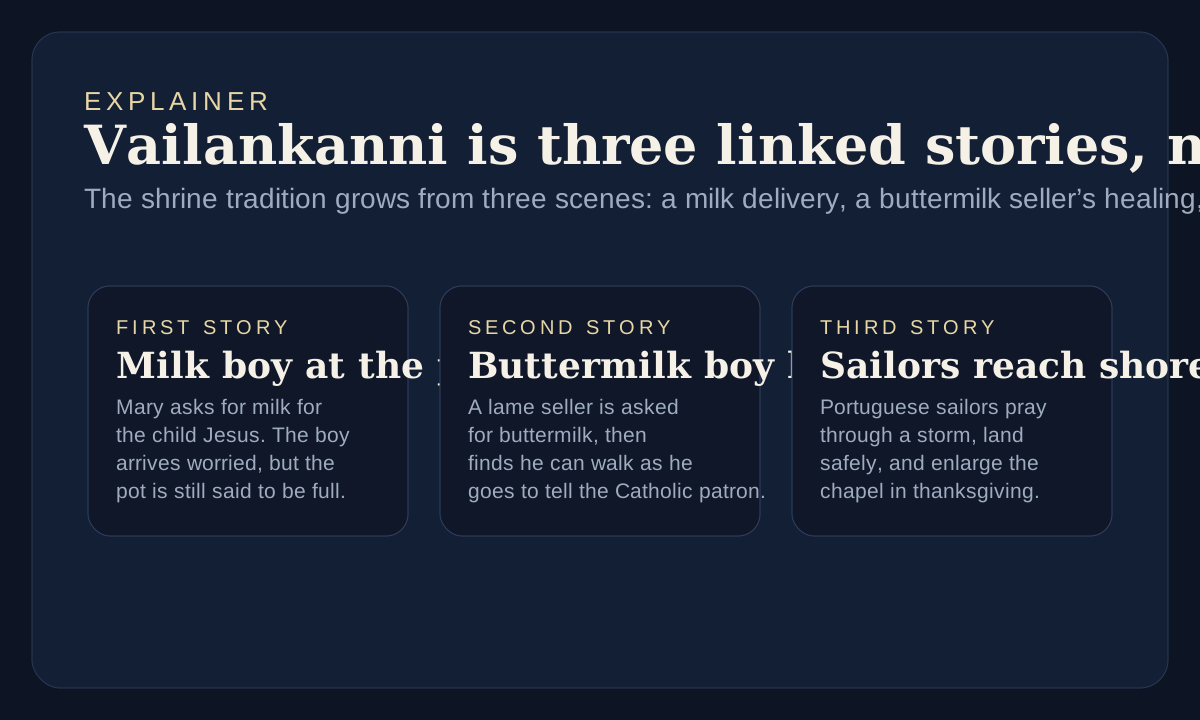
Vailankanni’s three linked stories
- Story 1 Milk boy A village boy says the Virgin appeared while he was carrying milk, yet the milk was still there afterward.
- Story 2 Buttermilk boy A lame seller reports an apparition, receives healing, and is told to guide a Catholic patron to the site.
- Story 3 Portuguese sailors A storm-at-sea story links the shrine to seafarers who believed they were saved by Mary’s help.
Publicly documented chronology
Section titled “Publicly documented chronology”The official shrine chronology places the first two events in the 16th century and the rescue of the Portuguese sailors in the 17th century.[1] [2]
According to the shrine tradition:
- a young milk carrier resting near a pond gave milk to Mary for the child Jesus, and the customer later found the milk pot still full[3]
- later, a lame boy selling buttermilk encountered the same Lady, was healed, and was told to inform a Catholic man in Nagapattinam who had already seen a confirming vision[3]
- Portuguese sailors caught in a storm reached the coast safely, were brought to the chapel by local fishermen, and later built a more permanent church in gratitude[1] [3]
The shrine pages associate the site with physical healing, vows, thanksgiving offerings, and cross-religious pilgrimage.[1] [4]
The growth of the shrine
Section titled “The growth of the shrine”The later shrine chronology records that the site was raised to the status of a parish in 1771, the church was enlarged in 1920 and 1933, and Pope John XXIII elevated it to a minor basilica on November 3, 1962.[1]
The same chronology also notes later devotional markers attached to the older miracle traditions:
- a chapel for the milk-boy apparition was built in 1982[1]
- a chapel for the buttermilk boy was built in 2002[1]
- the basilica describes itself as the “Lourdes of the East,” a title it links to its healing identity and large pilgrimage culture[1]
Shrine form and public devotion
Section titled “Shrine form and public devotion”Vailankanni shows how a miracle site can become globally known without ever taking the form of a modern European-style canonical apparition inquiry.
Its evidential force rests on:
- the continuity of the shrine tradition over centuries
- the scale of pilgrimage and healing devotion
- the shrine’s later elevation to minor basilica status[1]
The shrine today
Section titled “The shrine today”The official site presents Vailankanni as a place of healing, vows, and thanksgiving for pilgrims from India and well beyond it.[1] [4]
References
Section titled “References”- Basilica of Our Lady of Good Health, Vailankanni. “Shrine Basilica Chronology.” Official shrine chronology covering the major stages of the site’s history, including the apparition traditions and basilica status. Available at: https://vailankanni.info/shrine-basilica-chronology/
- Basilica of Our Lady of Good Health, Vailankanni. “History of Velankanni.” Official shrine summary of the milk-boy apparition, the healing of the buttermilk boy, and the Portuguese sailors tradition. Available at: https://vailankanni.info/history-of-velankanni/
- Basilica of Our Lady of Good Health, Vailankanni. “Apparitions of Our Lady of Health.” Official shrine retelling of the milk-boy apparition, the cure of the buttermilk boy, and the Portuguese sailors tradition. Available at: https://vailankanni.info/apparitions-of-our-lady-of-health/
- Basilica of Our Lady of Good Health, Vailankanni. “Velankanni Shrine Miracles.” Official shrine page presenting the sanctuary’s healing and thanksgiving tradition. Available at: https://vailankanni.info/velankanni-shrine-miracles/