Our Lady of Lourdes (1858)
The story in one line
the Virgin Mary appeared to Bernadette Soubirous at Lourdes in 1858 and identified herself at the grotto.
The basic story
In 1858, Bernadette Soubirous reported 18 apparitions of the Virgin Mary at the grotto of Massabielle in Lourdes, France. The local bishop recognized the apparitions in 1862, and Lourdes became one of the world's most intensively investigated healing shrines.
Reported message
Historical setting
Lourdes begins in 1858 in a small Pyrenean town, where Bernadette Soubirous's reports at the grotto quickly drew crowds, scrutiny, and later a worldwide pilgrimage culture.
Apparition cycle
February 11 to July 16, 1858
The official Lourdes chronology preserves 18 apparitions over those five months.
Spring event
February 25, 1858
The sanctuary links the emergence of the spring directly to Bernadette’s reported instruction at the grotto.
Diocesan decree
January 18, 1862
Bishop Laurence recognized the apparitions and authorized public devotion in the official decree.
Recognized cures at Lourdes
70
The sanctuary medical pages distinguish thousands of reported cures from the smaller number formally recognized by Catholic authorities.
Primary-source file
Section titled “Primary-source file”Official overview of the shrine, apparitions, and international pilgrimage record.
lourdes-france.org Official decree The DecreeSanctuary page preserving the 1862 decree and the basic chronology used in the diocesan judgment.
lourdes-france.org Official grotto file The Grotto of the Apparitions at MassabielleOfficial page on the grotto site, the spring, and the continuing pilgrimage use of the place.
lourdes-france.org Official medical file Miraculous Healings and Recognition ProcessOfficial sanctuary explanation of how reported cures move from medical review to recognition.
lourdes-france.orgThe story
Section titled “The story”The Lourdes story begins with a teenage girl, a grotto outside town, and a spring that people still use today. Between February 11 and July 16, 1858, Bernadette Soubirous, a poor fourteen-year-old girl from Lourdes, reported a series of 18 apparitions at the grotto of Massabielle.[1] [2]
Bernadette described a lady dressed in white with a blue sash and yellow roses on her feet.[2] During the apparitions, the lady called for prayer, penance, and the construction of a chapel.[1]
On March 25, 1858, the lady identified herself with the words: “I am the Immaculate Conception.”[3] In the Catholic reception of the case, that phrase became decisive because Bernadette was an uneducated village girl unlikely to have invented or even fully understood a recently defined theological title on her own.
What makes Lourdes easier to follow than many apparition pages is that the story does not stop with the reported visions. The place stayed public, the spring stayed in use, the bishop issued a decree, and later doctors began reviewing healing claims connected with the shrine. So readers are not looking at one isolated visionary story. They are looking at an apparition file that turned into a long, visible public record.
Why many readers start with Lourdes
Section titled “Why many readers start with Lourdes”- The apparition dates are fixed and easy to follow.
- The spring gives the story a concrete place and a continuing public practice.
- The later Lourdes medical bureau lets readers compare the apparition story with a much larger healing record.
Publicly documented chronology
Section titled “Publicly documented chronology”The Lourdes sequence has a clear internal development.[2]
- February 11: the first apparition takes place at Massabielle[2]
- February 25: Bernadette is told to dig in the ground and a spring begins to appear[2]
- March 25: the lady identifies herself as the Immaculate Conception[3]
- July 16: the final apparition closes the public sequence[2]
The chronology became attached to a specific place, a spring, a bishop’s inquiry, and later a permanent shrine.
The spring
Section titled “The spring”On February 25, 1858, Bernadette said she was instructed to dig in the ground, where a spring emerged.[2] That spring still flows at the shrine and became the focal point of Lourdes’ healing claims.[1]
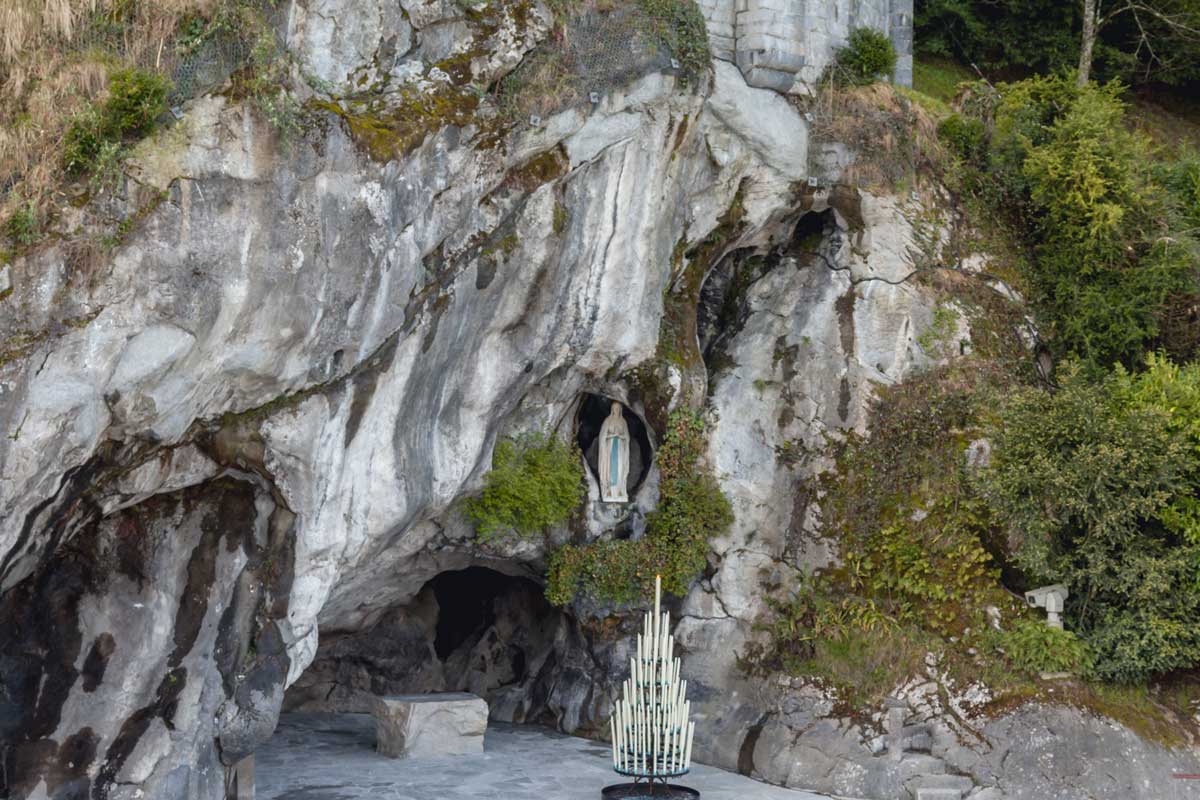
The official grotto description emphasizes that the spring has remained materially connected to pilgrimage ever since: pilgrims drink from it, collect its water, and take part in the water gesture at the sanctuary.[2]
This ties the apparition history directly to the later healing tradition, which is why Lourdes occupies a unique place in miracle literature.
Diocesan judgment
Section titled “Diocesan judgment”After an investigation, Bishop Bertrand-Sévère Laurence of Tarbes issued the decisive decree on January 18, 1862:[3]
- he judged that Mary had truly appeared to Bernadette
- he permitted public devotion
- Lourdes thereafter developed into an officially recognized pilgrimage site
That decree remains the key ecclesiastical judgment behind Lourdes.
What followed from Lourdes
Section titled “What followed from Lourdes”The public record around Lourdes is unusually extensive in three ways:
- the apparition testimony of Bernadette was formally recognized by the local bishop[3]
- the shrine became a continuous place of pilgrimage rather than a short-lived enthusiasm[1]
- reported healings there were later subjected to an unusually rigorous medical review structure through the Lourdes Medical Bureau[4]
According to the sanctuary’s own medical pages, thousands of cures have been presented over time, while only 70 have been formally recognized by Catholic authorities as miraculous after the full medical and ecclesial process.[4]
So Lourdes is not documented only through Bernadette’s reports. The apparitions also led to one of the best-known long-term Catholic systems for testing healing claims.
Media and pilgrimage
Section titled “Media and pilgrimage”The sanctuary continues to provide live access to the grotto:
References
Section titled “References”- Sanctuary of Our Lady of Lourdes. “The Sanctuary of Our Lady of Lourdes.” Official overview of the shrine, its apparitions, and its place as a global pilgrimage site. Available at: https://www.lourdes-france.org/en/the-sanctuary-of-our-lady-of-lourdes/
- Sanctuary of Our Lady of Lourdes. “The Decree” and “The Grotto of the Apparitions at Massabielle.” Official summary of the apparition chronology, the spring, and the site. Available at: https://www.lourdes-france.org/en/the-decree/ and https://www.lourdes-france.org/en/the-grotto-of-the-apparitions-at-massabielle/
- Sanctuary of Our Lady of Lourdes. “The Decree.” Includes the text and context of Bishop Laurence’s 1862 recognition of the apparitions. Available at: https://www.lourdes-france.org/en/the-decree/
- Sanctuary of Our Lady of Lourdes. “The Miracles of Lourdes,” “Recognition of a miracle,” and “Miraculous healings.” Official description of the Medical Bureau, the recognition process for cures, and the sanctuary’s list of recognized miraculous healings. Available at: https://www.lourdes-france.org/en/the-miracles-of-lourdes/, https://www.lourdes-france.org/en/recognition-miracle/, and https://www.lourdes-france.org/en/miraculous-healings/