
Rue du Bac / Miraculous Medal (1830)
The story in one line
Catherine Laboure saw the Virgin Mary in her convent chapel in Paris in 1830 and received the pattern for the Miraculous Medal.
The basic story
In 1830, Catherine Laboure of the Daughters of Charity reported Marian apparitions at Rue du Bac in Paris. The chapel sources say the medal associated with those visions spread rapidly through France and beyond after it was struck in 1832.
Reported message
Historical setting
Rue du Bac belongs to the upheaval of Paris in 1830, where Catherine Laboure's convent visions were followed by the striking and spread of the Miraculous Medal.
.jpg)
Apparition cycle
July to December 1830
The official chapel chronology preserves a July apparition, the medal vision of November 27, and a final December confirmation.
Visionary
Catherine Laboure
The Daughters of Charity identify Catherine Laboure as the sister who reported the 1830 Rue du Bac apparitions.
Medal circulation
First struck in 1832
The official medal page links the first large distribution to the Paris cholera epidemic of 1832.
Later life
Reuilly service, 1831–1876
The shrine says Catherine left the seminary house in 1831 and spent decades serving the elderly poor before her death in 1876.
Primary-source file
Section titled “Primary-source file”Official chapel material on Catherine Laboure, the apparitions, and the preserved shrine tradition.
chapellenotredamedelamedaillemiraculeuse.com Official apparition chronology Night of July 18, 1830Official chapel page for the first apparition night, the child guide, and the altar promise.
chapellenotredamedelamedaillemiraculeuse.com Official apparition chronology November 27, 1830Official chapel page for the medal image, rays, invocation, and instruction to have the medal struck.
chapellenotredamedelamedaillemiraculeuse.com Official medal file Miraculous MedalOfficial page with the medal symbolism and the early distribution figures preserved by the shrine.
chapellenotredamedelamedaillemiraculeuse.comThe core claim
Section titled “The core claim”At the motherhouse of the Daughters of Charity at 140 Rue du Bac in Paris, Sister Catherine Laboure reported a series of Marian apparitions in 1830.[1]
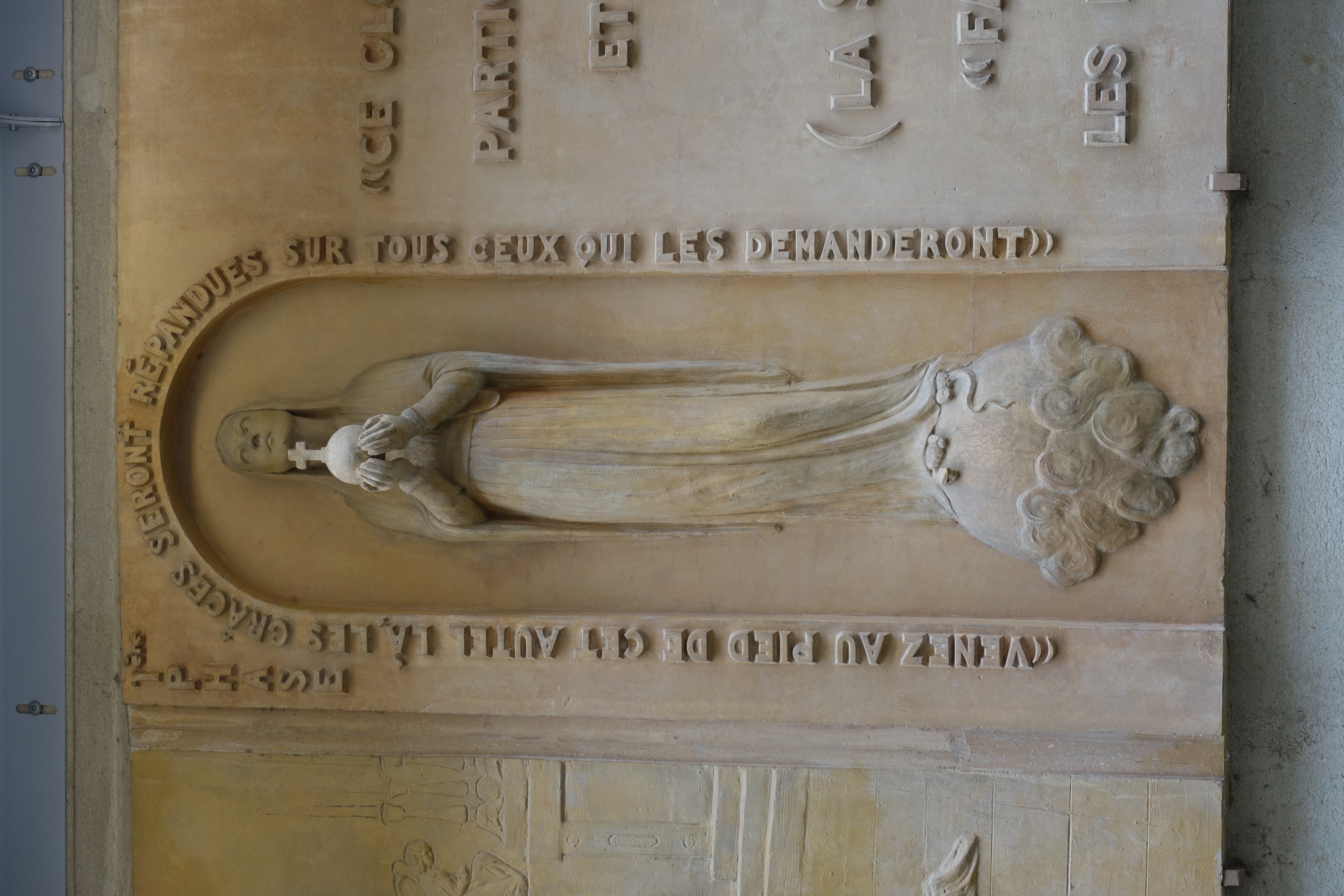
The best-known of these visions is the one traditionally dated to November 27, 1830, in which Mary was shown standing on a globe with rays issuing from her hands, surrounded by the invocation:
O Mary, conceived without sin, pray for us who have recourse to thee.
According to the tradition preserved at the shrine, Catherine was told to have a medal struck from this image.[1]
The shrine’s own historical presentation is more specific than many short summaries. It treats the Rue du Bac cycle as a sequence running from July to December 1830, with:
- a first night apparition on July 18, 1830[2]
- the medal vision on November 27, 1830[3]
- a final confirmation in December 1830 before Catherine left the seminary house in early 1831[4]
Publicly documented chronology
Section titled “Publicly documented chronology”The official chapel account gives the first apparition a more intimate character than the later medal vision.
For the night of July 18, 1830, the shrine says Catherine was awakened around 11:30 p.m. by a childlike guide, led into the chapel, and brought before Mary seated in a chair near the sanctuary.[2] In that account, Mary pointed Catherine toward the altar and said that graces would be given there to those who asked for them with confidence and fervor.[2]
For November 27, 1830, the shrine says Catherine saw Mary standing on a half-globe with her feet on the serpent, holding a smaller globe up toward heaven, then appearing with rays issuing from rings on her hands.[3] The same page preserves the phrases that the globe represented the world, France, and each person in particular, that the rays symbolized graces, and that a medal should be struck from the image.[3]
The December 1830 page says the same image of the medal appeared again near the tabernacle, that Catherine was told she would not see Mary again, and that she then carried the request to Fr. Aladel, who initially reacted skeptically.[4]
What followed from Rue du Bac
Section titled “What followed from Rue du Bac”The historical profile of Rue du Bac is different from cases like Fatima or Knock.
- it is not a mass-witness apparition
- the central testimony comes through Catherine and her community
- the historical impact comes mainly through the Miraculous Medal itself and the speed of the devotion’s spread
The official chapel presents the December 1830 apparition as the close of the visionary sequence and notes that the medal, first produced in 1832, spread with exceptional speed through France, the United States, Poland, China, and Russia.[4]
The cited chapel materials center on Catherine’s testimony, the medal chronology, reported favors associated with the medal, and the institutional history of the shrine.[1] [4] [5] [6] [7]
A visual overview of the shrine
Section titled “A visual overview of the shrine”The video below is a short pilgrimage-style overview of Rue du Bac and the Miraculous Medal devotion, filmed on site in Paris.[8]
The medal itself
Section titled “The medal itself”The chapel’s own medal page gives more detail than the usual one-line retelling.
It links the front of the medal to three ideas in particular:
- the invocation to Mary as conceived without sin[5]
- Mary’s intercession for those who ask her help[5]
- the image of Mary standing on the globe and crushing the serpent as a sign of spiritual conflict and victory over evil[5]
The same shrine page also preserves the early distribution figures it associates with the devotion:
- the first 2,000 medals distributed in June 1832 during the Paris cholera epidemic[5]
- more than 500,000 by autumn 1834[5]
- more than 1,000,000 in 1835[5]
- more than 10,000,000 by 1839[5]
The official chapel page presents these figures as the early expansion of the devotion.[5]
Catherine Labouré after the apparitions
Section titled “Catherine Labouré after the apparitions”Rue du Bac is also unusual because the visionary did not spend the rest of her life as a public shrine figure. The shrine says Catherine, born Zoe Labouré in 1806, left the seminary house in 1831 and spent 46 years serving the elderly poor at the hospice of Enghien / Reuilly in Paris before her death in 1876.[4] [6]
The devotion spread publicly through the medal long before most people knew much about Catherine herself.
What is firmly documented
Section titled “What is firmly documented”What is historically clear:
- the chapel at Rue du Bac became the center of the Miraculous Medal devotion[1]
- Catherine Laboure was identified by the Daughters of Charity as the visionary linked to that devotion[1]
- the shrine preserves a specific three-stage apparition chronology for July 18, November 27, and December 1830[2] [3] [4]
- the medal was in circulation by 1832 and spread internationally very quickly[4] [5]
- the site remains one of the major Marian pilgrimage chapels in Paris[7]
- the shrine connects the devotion to later Vincentian growth and to the much longer hidden life of Catherine herself[6]
What is less like a modern evidentiary case:
- there is no medical board or scientific file comparable to Lourdes
- there is no large contemporary witness pool like Fatima or Zeitoun
- the historical file depends heavily on the chapel’s preserved tradition and the testimony of Catherine’s superiors and community
References
Section titled “References”- Chapelle Notre-Dame de la Medaille Miraculeuse. Official shrine material on the apparitions and Catherine Laboure, including the preserved tradition of the 1830 visions at Rue du Bac. Available at: https://www.chapellenotredamedelamedaillemiraculeuse.com/
- Chapelle Notre-Dame de la Medaille Miraculeuse. “Nuit du 18 juillet 1830.” Official chapel page describing the first apparition night, the child guide, and the directive to come to the foot of the altar for graces. Available at: https://www.chapellenotredamedelamedaillemiraculeuse.com/apparitions-et-medaille/nuit-du-18-juillet-1830/
- Chapelle Notre-Dame de la Medaille Miraculeuse. “27 novembre 1830.” Official chapel page describing the globe, rays, serpent, invocation, and instruction to strike the medal. Available at: https://www.chapellenotredamedelamedaillemiraculeuse.com/apparitions-et-medaille/27-novembre-1830/
- Chapelle Notre-Dame de la Medaille Miraculeuse. “La chapelle aujourd’hui.” Official description of the chapel, its relics, and its continuing devotional role. Available at: https://www.chapellenotredamedelamedaillemiraculeuse.com/la-chapelle-aujourdhui/
- Chapelle Notre-Dame de la Medaille Miraculeuse. “Decembre 1830.” Official chapel page describing the last apparition, Catherine’s departure for Reuilly in 1831, and the early international spread of the medal. Available at: https://www.chapellenotredamedelamedaillemiraculeuse.com/apparitions-et-medaille/decembre-1830/
- Chapelle Notre-Dame de la Medaille Miraculeuse. “Medaille Miraculeuse.” Official chapel page explaining the symbolism of the medal and preserving its early distribution figures during and after the 1832 cholera epidemic. Available at: https://www.chapellenotredamedelamedaillemiraculeuse.com/apparitions-et-medaille/medaille-miraculeuse/
- Chapelle Notre-Dame de la Medaille Miraculeuse. “Family History” and “Catherine Laboure.” Shrine pages connecting the apparitions to Vincentian growth and recounting Catherine’s longer hidden life after 1830. Available at: https://www.chapellenotredamedelamedaillemiraculeuse.com/langues/english/histoire-dune-famille-gb/ and https://www.chapellenotredamedelamedaillemiraculeuse.com/histoire-dune-famille/catherine-laboure/
- Marians of the Immaculate Conception / Divine Mercy. “Rue de Bac and the Miraculous Medal.” Video overview of the Rue du Bac shrine and the Miraculous Medal devotion, hosted by Fr. Joseph Roesch, MIC. Available at: https://marian.org/videos/rue-de-bac-and-miraculous-medal and direct YouTube link: https://www.youtube.com/watch?v=m_foSsCpiKs