
Our Lady of China / Donglu (1900)
The story in one line
Mary intervened protectively at Donglu during the Boxer era and that this memory shaped later devotion to Our Lady of China.
The basic story
During the Boxer Rebellion, Catholics at Donglu in Hebei reported that a luminous woman identified as the Virgin Mary protected the village from attack. Later church and parish summaries connect Donglu with the history of the Our Lady of China devotion.
Reported message
Historical setting
Donglu stands within the Boxer-era crisis in north China, where a Marian protection story, later church memory, and the development of the Our Lady of China image became linked.
Event setting
Boxer Rebellion, 1900
The cited church summaries place the protection story during the anti-Christian violence of 1900.
Location
Donglu, Hebei
The Holy Spirit Study Centre places Donglu about 40 kilometres from Baoding in Hebei province.
Image tradition
Mary in imperial Chinese robes
Church sources say a local priest commissioned an image of Mary and the Christ Child in imperial dress after the reported protection.
Later shrine record
Pilgrimage tradition by the 20th century
The Hong Kong study-centre article says official pilgrimages began in 1929 and continued in large numbers in May.
The story
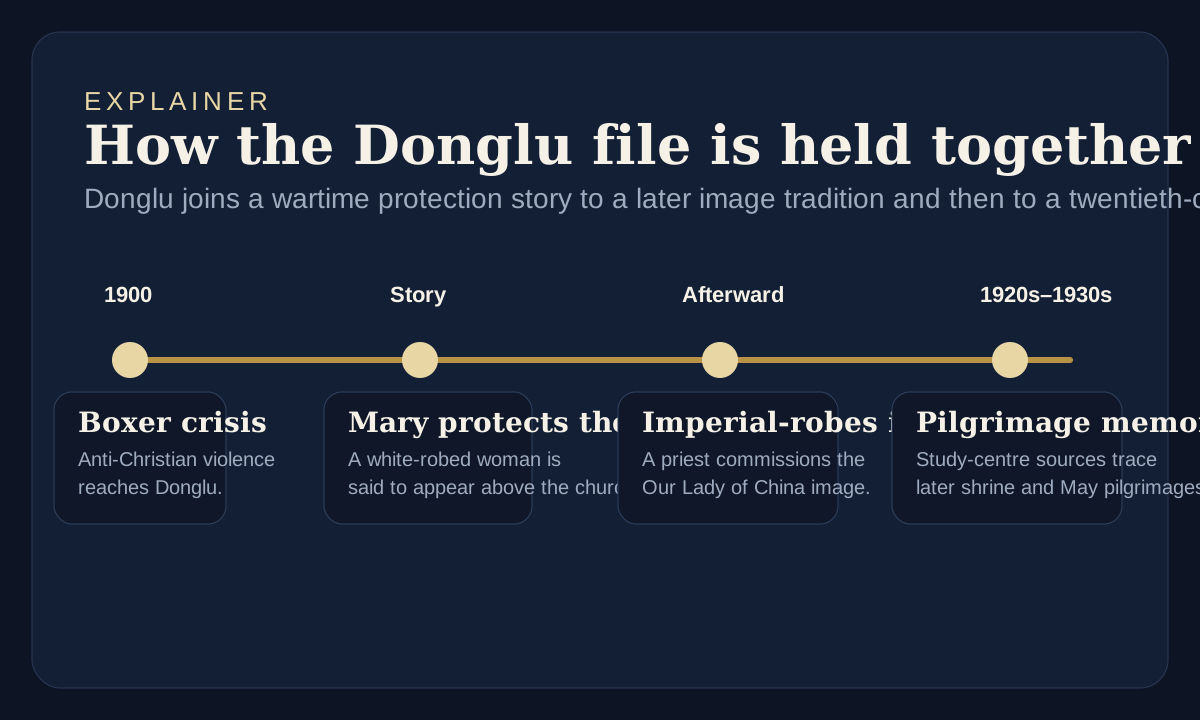
Section titled “The story”The Donglu story starts in a wartime emergency. During the Boxer Rebellion in 1900, Catholics in the village of Donglu believed anti-Christian forces were closing in on them. The tradition says that a white-robed woman identified as the Virgin Mary appeared above the church and that the attackers withdrew rather than entering the village.[1] [2]
In many retellings, St. Michael also appears as a warrior figure. Later church summaries then connect that protection story to the image known as Our Lady of China, painted in imperial robes, and to a later pilgrimage record at Donglu itself.[1] [2] [3]
Donglu in four parts
- 1900 Village in danger The story begins with Catholics in Donglu facing danger during the Boxer uprising.
- Claim Mary above the church The tradition says a white-robed woman was seen over the church and the attack did not enter the village.
- Later memory St. Michael and protection Retellings often add St. Michael and preserve the event as a protection story.
- Afterward Image and shrine life The public file later expands into Our Lady of China imagery and pilgrimage at Donglu.
Primary-source file
Section titled “Primary-source file”This church summary gives the 1900 attack account, Father Wu’s prayer, the apparition report, and the commissioned image in imperial robes.
cbcew.org.uk Chinese parish summary Our Lady of ChinaThe parish page ties the Donglu protection account to the later Our Lady of China devotion.
holynamechinesecatholicchurch.org Hong Kong study-centre article China’s Marian ShrinesThe Holy Spirit Study Centre article adds the first official pilgrimage in 1929, the reported 1932 shrine approval, and the later Donglu pilgrimage record.
hsstudyc.org.hkPublicly documented chronology
Section titled “Publicly documented chronology”What is documented
Section titled “What is documented”Church and parish summaries connect Donglu both with the 1900 protection story and with later Our Lady of China devotion.[1] [2] [3]
Church sources summarizing the tradition note that:
- the village was remembered as having been spared during the Boxer violence[1]
- an image of Mary in imperial Chinese dress was later commissioned in connection with the shrine tradition[2]
- the cited church and study-center sources connect Donglu with wider Our Lady of China devotion in China and in Chinese Catholic communities[1] [3]
The shrine and image tradition
Section titled “The shrine and image tradition”The CBCEW summary says Father Wu commissioned an image after the reported 1900 deliverance, depicting Mary and the Christ Child in golden imperial robes.[1] The Hong Kong study-centre article similarly says the pastor secured an image based on imperial court dress and that the picture was hung in the Donglu church.[3]
The same cited material connects that image with later Our Lady of China devotion.[1] [2]
Later pilgrimage record
Section titled “Later pilgrimage record”The Holy Spirit Study Centre article adds a later shrine chronology to the Donglu story:
- pilgrims began coming to Donglu in 1924[3]
- the first official pilgrimage is dated there to 1929[3]
- the same article says Pope Pius XI approved Donglu as an official Marian shrine by 1932[3]
- it also records large May pilgrimages in the late 20th century despite government prohibitions[3]
The cited sources on this page preserve Donglu mainly through church summaries, parish materials, and study-centre history rather than through a single modern diocesan dossier.[1] [2] [3]
References
Section titled “References”- Catholic Bishops’ Conference of England and Wales. “Rachel’s Journey into Hope 22: China.” Church summary of the Our Lady of China tradition, including the Donglu background and the Boxer Rebellion context. Available at: https://www.cbcew.org.uk/rjs22-china/
- Holy Name of Jesus Chinese Catholic Church. “Our Lady of China.” Parish summary of the Donglu protection tradition, the reported Marian intervention during the Boxer crisis, and the growth of the devotion. Available at: https://www.holynamechinesecatholicchurch.org/our-lady-of-china
- Holy Spirit Study Centre, Hong Kong. Studies on Chinese Marian shrines and the history of Our Lady of China, including Donglu’s later devotional significance. See for example: https://hsstudyc.org.hk/cb200405/ and https://hsstudyc.org.hk/cb201807/