Abalaka Icon of the Mother of God (1636-1637)
The story in one line
the Abalaka icon became associated with extraordinary help and healings after its appearance and veneration in Siberia.
The basic story
Orthodox sources connect the Abalaka Icon in Siberia with a 1636 apparition tradition, a commissioned icon painted in 1637, and the reported healing of the paralytic Euthymius.
Historical setting
The Abalaka icon tradition grew in seventeenth-century Siberia, where an Orthodox icon, local devotion, and reports of healings became tied to the founding of the monastery.
Vision date in the file
1636
Orthodox sources place the widow Maria’s reported vision in 1636 near Abalak.
Commissioned icon
Painted in 1637
The OCA account says the icon was painted by Matthew, a protodeacon of the Tobolsk cathedral.
Healing in the file
Paralytic peasant Euthymius
The healing of Euthymius is the first miracle attached to the icon’s origin story.
Continuing record
Liturgical commemoration
The icon remains on the Orthodox liturgical calendar and is also commemorated on July 20.
How the Abalaka icon story begins
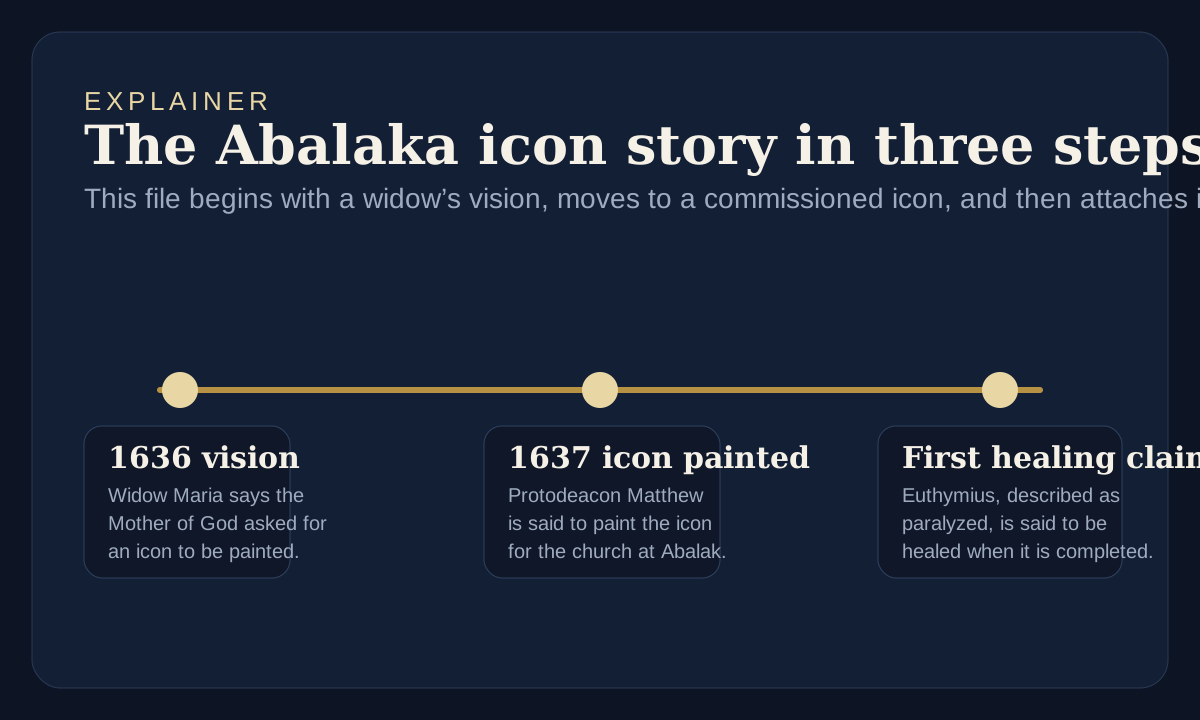
Section titled “How the Abalaka icon story begins”The Abalaka icon tradition starts with a reported vision and a request for a new sacred image. Orthodox sources say that in 1636 a poor widow named Maria, living near Abalak outside Tobolsk, reported that the Mother of God appeared to her together with Saint Nicholas and Saint Mary of Egypt and asked that an icon be painted for the local church.[1] [2]
According to the same sources, that request led to a painted image in 1637 by Matthew, a protodeacon of the Tobolsk cathedral. The story’s first miracle is attached to that same moment: a peasant named Euthymius, described in the Orthodox file as paralyzed or severely disabled, is said to have commissioned the icon after hearing Maria’s account and to have been healed when the image was completed.[1] [2]
From there the story becomes larger than one widow and one peasant. Orthodox sources say the icon was solemnly taken to the church at Abalak, that more healings were later reported, and that copies of the image spread the devotion far beyond its original village setting in Siberia.[1] [2]
Abalaka origin story
- Vision Maria’s report The story begins with a widow named Maria reporting a vision involving the Mother of God and St. Nicholas.
- Action Icon commissioned A painted icon is then made in response to the reported vision and request.
- First sign Euthymius healed Orthodox sources connect the icon’s completion to an early healing that helped spread devotion.
Primary-source file
Section titled “Primary-source file”The Orthodox Church in America entry gives the standard liturgical summary of the widow Maria, the 1637 icon, the healing of Euthymius, and the spread of wonderworking copies in Siberia.
oca.org Official OCA commemoration page Lives of all saints commemorated on November 27The OCA all-lives page repeats the Abalaka icon account and preserves its place in the Orthodox liturgical cycle.
oca.org Troparion and kontakion OCA liturgical texts for the Abalaka iconThe OCA troparion page shows the icon’s continuing liturgical commemoration and summarizes the widow’s vision, the commissioned icon, and the reported healings.
oca.orgPublicly documented chronology
Section titled “Publicly documented chronology”- 1636: Orthodox sources say the widow Maria reported a vision of the Mother of God near Abalak, with Saint Nicholas and Saint Mary of Egypt also present in the account.[1] [2]
- 1637: the church at Abalak was built and the icon was painted by Matthew, a protodeacon of the Tobolsk cathedral.[1] [2]
- When the icon was completed, the peasant Euthymius was reported healed.[1] [2]
- Orthodox sources also attach many healings to the solemn transfer of the icon to the Abalaka church and to the later spread of wonderworking copies throughout Siberia.[1] [2]
- The icon remains in the Orthodox calendar on November 27 and, according to the OCA, is also commemorated on July 20.[1] [2]
What is documented
Section titled “What is documented”The public Orthodox record for the Abalaka icon preserves two related strands:
- a specific vision-and-healing origin story in the 1630s[1] [2]
- a continuing liturgical and devotional tradition attached to the physical icon and its copies in Siberia[1] [2]
The later devotion
Section titled “The later devotion”Orthodox sources say the Abalaka icon quickly gained a reputation for healings and intercession, and copies of the image spread far beyond its original village church.[1] [2]
The Orthodox Church in America also notes that many healings were reported during the solemn transfer of the icon to the church at Abalak and that wonderworking copies were later venerated throughout Siberia.[1]
References
Section titled “References”- Orthodox Church in America. “Icon of the Mother of God of Abalaka.” Official OCA entry on the icon’s origin story, the widow Maria, the commissioned image, and the healing of Euthymius. Available at: https://www.oca.org/saints/lives/2026/11/27/103411-icon-of-the-mother-of-god-of-abalaka
- Orthodox Church in America. “Lives of all saints commemorated on November 27.” Official OCA liturgical calendar page repeating the Abalaka icon tradition and its continuing commemoration in Orthodox worship. Available at: https://www.oca.org/saints/all-lives/0200/11/27
- Orthodox Church in America. “Icon of the Mother of God of Abalaka - Troparion & Kontakion.” Official OCA liturgical commemoration page preserving the same core tradition in hymnographic form. Available at: https://www.oca.org/saints/troparia/2014/11/27/103411-icon-of-the-mother-of-god-of-abalaka