
Our Lady of Gietrzwałd (1877)
The story in one line
two girls in Gietrzwald reported Marian apparitions and messages in 1877.
The basic story
In Gietrzwałd, Poland, two girls reported Marian apparitions in 1877 amid anti-Polish pressure and restrictions on Catholic religious life under Prussian rule. The local bishop formally recognized the supernatural character of the apparitions in 1977.
Reported message
Historical setting
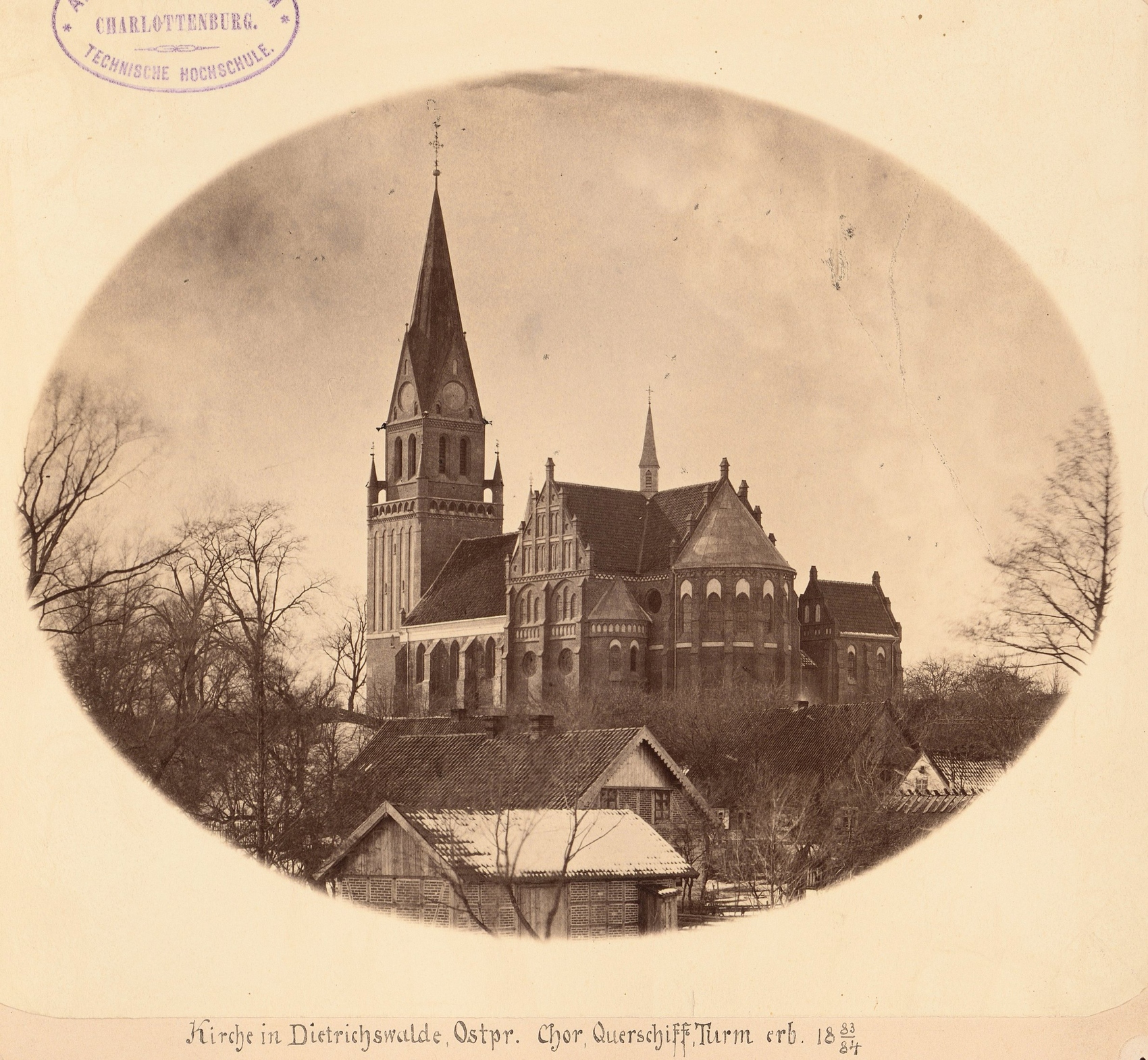
Gietrzwald arose in partitioned Poland in 1877, when two village girls reported Marian messages in a Catholic region living under Prussian rule.
Dates
June 27 to September 16, 1877
The shrine says the apparitions unfolded daily across roughly three months.
Visionaries
Justyna Szafryńska and Barbara Samulowska
The official shrine pages give their ages as 13 and 12 and provide later biographies.
Recognition
Decree of September 11, 1977
Bishop Józef Drzazga recognized the supernatural character at the centenary.
Distinctive feature
Mary spoke in Polish
The shrine treats this as central to the apparitions under Prussian rule.
The story
Section titled “The story”At Gietrzwald in 1877, two girls, Justyna Szafryńska and Barbara Samulowska, reported a long sequence of Marian apparitions beginning on June 27 and continuing into September.[1]
The shrine’s English-language account emphasizes several features:
- the apparitions occurred under Prussian rule and pressure against Polish language and Catholic religious life[1]
- Mary identified herself as the Immaculate Conception[1]
- she spoke to the visionaries in Polish[1]
- the message emphasized the Rosary, penance, and perseverance in faith[1]
What made the case especially powerful in local memory is the political setting. This part of Poland was under Prussian rule, and Polish Catholics were living under pressure from a government that tried to weaken both Polish language and Catholic religious life in public.[1] So when the shrine says Mary spoke to the girls in Polish, it presents that not as a minor detail but as one of the central features of the whole event.[1]
Primary-source file
Section titled “Primary-source file”The shrine-style page gives the 1877 chronology, historical background under Prussian rule, and the 1977 decree of recognition.
gietrzwald.cudamaryjne.pl Official shrine dossier Visionaries of GietrzwałdThe site adds the commission review, the girls’ biographies, and the later beatification cause of Barbara Samulowska.
gietrzwald.cudamaryjne.pl Official shrine overview Main sanctuary page and pilgrim framingThe main page presents Gietrzwałd as Poland’s only recognized Marian apparition site and foregrounds the ongoing pilgrimage identity.
gietrzwald.cudamaryjne.plPublicly documented chronology
Section titled “Publicly documented chronology”The visionaries and the course of the apparitions
Section titled “The visionaries and the course of the apparitions”The official shrine presentation places the events in a very specific local setting. Justyna was 13 and Barbara was 12, and the first apparition was reported beside a maple tree near the parish church.[1]
The shrine now summarizes the whole sequence as 160 apparitions over roughly three months.[1]
The same official account also treats the nearby spring as part of the lasting memory of the event. In the shrine tradition, Mary blessed the spring, and pilgrims later connected it with favors and healings.[1] So the case is remembered not only through what the girls said they saw, but also through a physical place where later pilgrims kept coming.[1]
The visionaries page adds details not present in the shorter summary:
- the ecclesiastical commission is said to have included priests and physicians who examined the girls’ testimony[2]
- Justyna later entered religious life in France for a time before returning to lay life[2]
- Barbara became Sister Stanisława, served for decades in Guatemala, and is now the subject of a beatification cause[2]
Recorded details
Section titled “Recorded details”The shrine’s public account treats the language element as central. Mary is said to have spoken to the girls in Polish during a period when Polish language and Catholic life were both under pressure from Prussian authorities.[1]
The shrine also emphasizes the unusually high number of apparitions, summarizing the sequence as about 160 apparitions across the summer of 1877.[2]
So in plain terms, the shrine says Gietrzwald stands out for three reasons: the apparitions were numerous, the message was given in Polish, and the site kept developing into a major pilgrimage center around the church and spring.[1] [2] [3]
Formal recognition and shrine continuity
Section titled “Formal recognition and shrine continuity”The Gietrzwald site states that on September 11, 1977, Bishop Józef Drzazga of Warmia issued the decree recognizing the supernatural character of the events.[1]
The shrine presents Gietrzwald as the only officially recognized Marian apparition in Poland.[1]
The shrine also notes that the centenary recognition was proclaimed in the presence of Cardinal Karol Wojtyła, the future Pope John Paul II.[1]
The shrine today
Section titled “The shrine today”The official Gietrzwald presentation describes the site as a pilgrimage center where pilgrims come to pray before the shrine image, at the Chapel of the Apparitions, and at the spring tied to the 1877 events.[1] [3]
The main page also presents Gietrzwald as a destination for present-day pilgrims who come for prayer, silence, and petitions at the shrine.[3]
References
Section titled “References”- Gietrzwałd – Marian Apparitions in Poland. “The Miracle of Gietrzwałd.” Shrine-style English account summarizing the apparitions, their historical background under Prussian rule, and Bishop Józef Drzazga’s 1977 decree of recognition. Available at: https://gietrzwald.cudamaryjne.pl/en/cud-w-gietrzwaldzie.html
- Gietrzwałd – Marian Apparitions in Poland. “The Visionaries of Gietrzwałd.” Official shrine-style page describing the girls’ biographies, the commission review, the later life of Barbara Samulowska, and the duration of the apparitions. Available at: https://gietrzwald.cudamaryjne.pl/en/wizjonerki-z-gietrzwaldu.html
- Gietrzwałd – Marian Apparitions in Poland. Home page summary of the shrine, stressing that Gietrzwałd is Poland’s only recognized Marian apparition site and highlighting the large number of apparitions and ongoing pilgrimage life. Available at: https://gietrzwald.cudamaryjne.pl/en/