
Our Lady of La Salette (1846)
The story in one line
two shepherd children saw a Marian apparition on a mountain near La Salette in 1846.
The basic story
On September 19, 1846, two shepherd children in the French Alps reported seeing a luminous, weeping lady who gave a message calling people to repentance and reconciliation. After five years of investigation, the bishop of Grenoble recognized the apparition.
Reported message
Historical setting
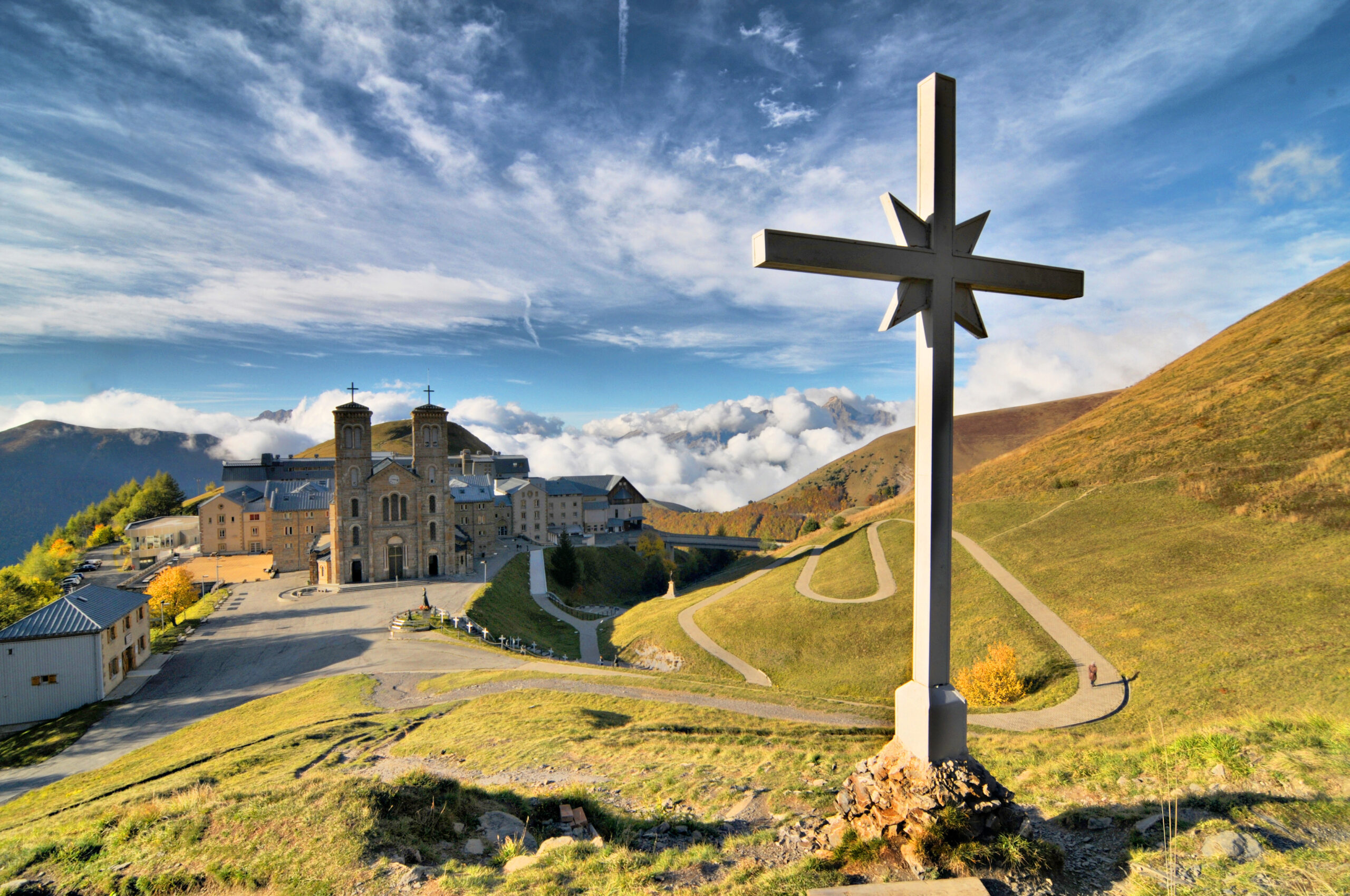
La Salette belongs to mountain France in 1846, when two shepherd children reported an apparition amid crop failure, rural hardship, and strong religious tensions.
Date
September 19, 1846
The apparition is tied to one fixed day in the Alpine pastures above La Salette-Fallavaux.
Witnesses
Maximin Giraud and Melania Calvat
The official sanctuary history gives their ages as 11 and 14.
Recognition
Mandate of Bishop de Bruillard in 1851
The sanctuary says the bishop recognized the authenticity after five years of inquiry.
Sanctuary life
Pilgrimage center founded in 1852
Masses, message presentations, and guided visits continue on the mountain today.
The story
Section titled “The story”La Salette begins with a mountain scene, not a town crowd. On September 19, 1846, the shepherd children Maximin Giraud and Mélanie Calvat said they saw a Beautiful Lady seated and weeping in the Alpine pastures above La Salette.[1]
The public memory of the event stays focused on two things. First, the children said the Lady was in tears. Second, they said she spoke at length about conversion, prayer, and reconciliation before disappearing into the light.[1]
The scene is easier to picture if it is taken step by step: two young shepherds on a remote mountain, a radiant woman sitting and crying, a spoken message delivered in both French and the local dialect, and then a bishop’s inquiry that ended with formal recognition five years later.[1]
The apparition was remembered especially for two features:
- the lady was described as weeping[1]
- she delivered a message calling people to repentance and reconciliation, addressed to “all her people”[1]
The official sanctuary adds several concrete details that gave the event its enduring visual identity. Maximin was 11 and Melanie 14. They said the Lady was first seen seated and in tears, then stood and spoke at length in French and the local dialect, wearing a large crucifix with a hammer and pliers and roses on her clothing before disappearing into the light.[1]
Primary-source file
Section titled “Primary-source file”The sanctuary history gives the witness ages, the visual details of the apparition, and the recognition mandates of 1851 and 1855.
lasalette.cef.fr Official sanctuary life Current sanctuary pilgrimage activityThe sanctuary currently schedules Masses, audiovisual presentations of the message, guided tours, and museum access on the mountain.
lasalette.cef.fr Official sanctuary schedule Current liturgical and hospitality scheduleThe official sanctuary timetable shows the continuing daily life of the site, including hospitality, pastoral service, and access to the mountain sanctuary.
lasalette.cef.frPublicly documented chronology
Section titled “Publicly documented chronology”The event as the sanctuary remembers it
Section titled “The event as the sanctuary remembers it”The sanctuary’s own history emphasizes:
- a fixed date and location in the mountain pastures above the village[1]
- two named child witnesses whose ages are known[1]
- a message centered on repentance and reconciliation rather than on cures or repeated manifestations[1]
- a memorable iconography that shaped the later sanctuary and worldwide La Salette devotion[1]
The sanctuary iconography centers on Mary in tears, and the shrine history links that image to sorrow over sin and concern for repentance.[1]
Formal recognition and early shrine development
Section titled “Formal recognition and early shrine development”The official sanctuary states that after five years of rigorous investigation, Bishop Philibert de Bruillard of Grenoble recognized the authenticity of the apparition by mandate in 1851.[1] It also notes that Bishop Ginoulhiac reaffirmed that judgment after a further inquiry in 1855.[1]
The sanctuary history also shows how quickly the event was institutionalized. In 1852, Bishop de Bruillard announced the foundation of a sanctuary with accommodation for pilgrims and created the Missionaries of Notre-Dame de La Salette to serve the site and spread the message.[1]
Within a few years, the apparition had a bishop’s mandate, a sanctuary project, and a missionary congregation tied directly to the 1846 event.[1]
The sanctuary today
Section titled “The sanctuary today”The current sanctuary page advertises:
- daily Mass and prayer schedules during the pilgrimage season[2]
- audiovisual presentations of the Message of La Salette[2]
- guided tours explaining both the apparition and the later pilgrimage history[2]
- a museum dedicated to the event, the devotion, and the spread of the message[2]
- year-round hospitality and pastoral reception according to the official sanctuary schedule[3]
The cited sanctuary page presents La Salette as an active French Marian sanctuary.[2]
References
Section titled “References”- Sanctuaire Notre-Dame de La Salette. “History.” Official sanctuary history describing the September 19, 1846 apparition, the two shepherd children, the message calling people to repentance and reconciliation, and Bishop de Bruillard’s 1851 recognition after five years of investigation. Available at: https://lasalette.cef.fr/en/history/
- Sanctuaire Notre-Dame de La Salette. “Come to the sanctuary.” Official sanctuary visitor page listing Masses, audiovisual presentations of the Message of La Salette, guided tours, and museum access, showing the site’s continuing pilgrimage life. Available at: https://lasalette.cef.fr/en/come-to-the-sanctuary/
- Sanctuaire Notre-Dame de La Salette. “Horaires des offices.” Official sanctuary schedule page describing the current rhythm of liturgy, hospitality, and pastoral reception at La Salette. Available at: https://lasalette.cef.fr/horaires/