
Our Lady of Kibeho (1981–1989)
The story in one line
students at Kibeho received Marian visions and messages in the 1980s.
The basic story
In Kibeho, Rwanda, several students reported Marian apparitions beginning in 1981. In 2001 Bishop Augustin Misago issued the definitive local judgment recognizing the authenticity of the apparitions of three visionaries.
Reported message
Historical setting
Kibeho belongs to modern Rwanda in the 1980s, when students at a Catholic secondary school reported Marian visions that later became tied to the country's history of suffering.
Reported beginning
November 28, 1981
The 2001 declaration dates the first reported apparition to late November 1981 at Kibeho College.
Recognized visionaries
3
The local judgment recognizes only Alphonsine Mumureke, Nathalie Mukamazimpaka, and Marie Claire Mukangango.
Definitive decree
June 29, 2001
Bishop Augustin Misago issued the final local declaration after nearly two decades of study.
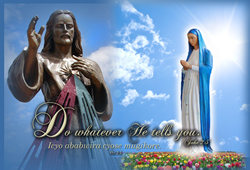
Shrine image enthroned
November 28, 2003
The CANA account describes the public statue developed from the approved seers’ descriptions and blessed in 2003.
Primary-source file
Section titled “Primary-source file”English text of Bishop Misago’s 2001 declaration describing the investigation, the recognized seers, and the final judgment.
ewtn.com Contemporary summary MGR Archive: Kibeho Declaration CoverageArchived summary of the declaration and the genocide-era historical context often linked to Kibeho.
mgr.org Official shrine record CANA: Creation of the Statue of Our Lady of KibehoShrine-based account of the statue design process, Nathalie Mukamazimpaka’s consultation, and the 2003 enthronement.
kibeho-cana.orgThe story
Section titled “The story”Beginning on November 28, 1981, schoolgirls in Kibeho, Rwanda reported apparitions of the Virgin Mary, who identified herself as Nyina wa Jambo or Mother of the Word.[1]
Over time, many alleged visionaries emerged. But the final local Catholic judgment was much narrower: only the apparitions associated with Alphonsine Mumureke, Nathalie Mukamazimpaka, and Marie Claire Mukangango were recognized as credible.[1]
In plain language, that means the Kibeho decree does not say, “everything people later reported at Kibeho is authentic.” It says the local Church found the case for those three named visionaries strong enough to approve after a long investigation. That narrowness is one reason Kibeho matters historically: the bishop was trying to separate a smaller core record from a much wider devotional world.
Publicly documented chronology
Section titled “Publicly documented chronology”The Kibeho declaration describes the investigation in stages rather than presenting the case as a single yes-or-no judgment.[1]
| Date | Public record |
|---|---|
| November 28, 1981 | Alphonsine Mumureke reports the first apparition at Kibeho.[1] |
| 1982 onward | Medical and theological commissions begin examining the reported apparitions.[1] |
| 1982–1983 | Bishop Misago later identifies this early period as the decisive evidential phase for the approved cases.[1] |
| 1988 | Public devotion linked to Kibeho is authorized before the final apparition judgment.[1] |
| June 29, 2001 | Bishop Misago issues the definitive local declaration recognizing the apparitions of three visionaries.[1] |
| November 28, 2003 | The shrine statue based on the approved seers’ descriptions is blessed and enthroned.[3] |
The official declaration therefore describes a selective investigation rather than an approval of all later visionary material.
What was recognized - and what was not
Section titled “What was recognized - and what was not”On June 29, 2001, Bishop Augustin Misago of Gikongoro issued the definitive local judgment declaring that there were more reasons to believe than to deny the authenticity of the apparitions received by the three recognized visionaries.[1]
The easiest way to read that ruling is this: the bishop was not giving Kibeho a blank check. He was saying that the investigation supported a limited core case tied to three specific women and the early years of the apparitions.
The declaration explicitly:
- affirmed the authenticity of the apparitions to those three women
- said the Virgin appeared under the title Mother of the Word[1]
- treated the early public apparitions as the central evidential period[1]
- withheld recognition from other alleged seers and later proliferating claims[1]
The 2001 decree did not approve every claimed vision or every later expansion of the Kibeho narrative. The definitive judgment was selective.[1]
The shrine image that followed recognition
Section titled “The shrine image that followed recognition”After the 2001 declaration, Bishop Misago also initiated the development of a public shrine image of Our Lady of Kibeho, Mother of the Word based on the recognized seers’ descriptions.[3] The CANA account preserved by the Marian Fathers says artists were commissioned, Nathalie Mukamazimpaka was consulted during the process, and the resulting statue was blessed and enthroned on November 28, 2003.[3]
The public shrine image now associated with Kibeho was deliberately shaped in continuity with the approved phase of the investigation.[3]
The message associated with Kibeho
Section titled “The message associated with Kibeho”The recognized Kibeho material is remembered above all for its call to:
- repentance and change of life[1]
- prayer and trust in God[1]
- accepting suffering in union with Christ[1]
- serious moral reform rather than curiosity about signs and secrets[1]
Supporters of the apparition point especially to visionary reports of terrifying scenes of violence, death, and rivers of blood, which were later read in light of the 1994 Rwandan genocide.[2] The official judgment, however, does not rest on retrospective prophecy alone. It roots approval in the narrower evidential and spiritual evaluation of the recognized witnesses.[1]
What the record shows
Section titled “What the record shows”Kibeho combines:
- formal diocesan recognition[1]
- modern chronology with living witnesses rather than only medieval tradition
- public visibility extending far beyond a small devotional circle
- a message centered on repentance, prayer, suffering, and change of life
References
Section titled “References”- Augustin Misago, Bishop of Gikongoro. “Declaration on the Definitive Judgment on the Apparitions of Kibeho.” English text hosted by EWTN. Available at: https://www.ewtn.com/catholicism/library/declaration-apparitions-of-kibeho-21169
- Zenit / Vatican-dossier style coverage summarizing the 2001 declaration and its historical context. Archived at MGR. Available at: https://www.mgr.org/kibeho.html
- CANA — Marian Formation Center of the Marian Fathers in Kibeho. “The Creation of the Statue of Our Lady of Kibeho, Mother of the Word.” Detailed account of how the post-recognition shrine statue was designed from the approved seers’ descriptions and enthroned in 2003. Available at: https://www.kibeho-cana.org/the-creation-of-the-statue-of-our-lady-of-kibeho-mother-of-the-word/