
Our Lady of Banneux (1933)
The story in one line
a young girl at Banneux saw the Virgin Mary several times in 1933 and was led to a spring linked with healing devotion.
The basic story
From January 15 to March 2, 1933, Mariette Beco reported eight apparitions of the Virgin Mary at Banneux, Belgium, where Mary identified herself as the Virgin of the Poor. The apparitions were definitively recognized in 1949.
Reported message
Historical setting
Banneux belongs to the Depression-era Belgian apparition wave: a young girl, an impoverished family, and a winter sequence of reported appearances in 1933.
Dates
January 15 to March 2, 1933
The official sanctuary chronology treats the case as eight apparitions across six weeks.
Visionary
Mariette Beco
The sanctuary presents the case around a single child witness led repeatedly toward the spring and chapel site.
Recognition
Definitive decree on August 22, 1949
The recognition page also records earlier diocesan steps in 1942 and 1947.
Shrine markers
Spring, little chapel, and care for the sick
The official site ties the Banneux memory especially to the spring, prayer, and blessing of the sick.
The story
Section titled “The story”At Banneux, Belgium, Mariette Beco reported eight apparitions of Mary between January 15 and March 2, 1933.[1]
In the official sanctuary account, Mary identifies herself as the Virgin of the Poor and links the apparitions to a spring she says is “for all nations” and “to relieve the sick.”[1] [2]
The messages most associated with Banneux are:
- “I am the Virgin of the Poor”[1]
- “This spring is reserved for all nations… to relieve the sick”[1]
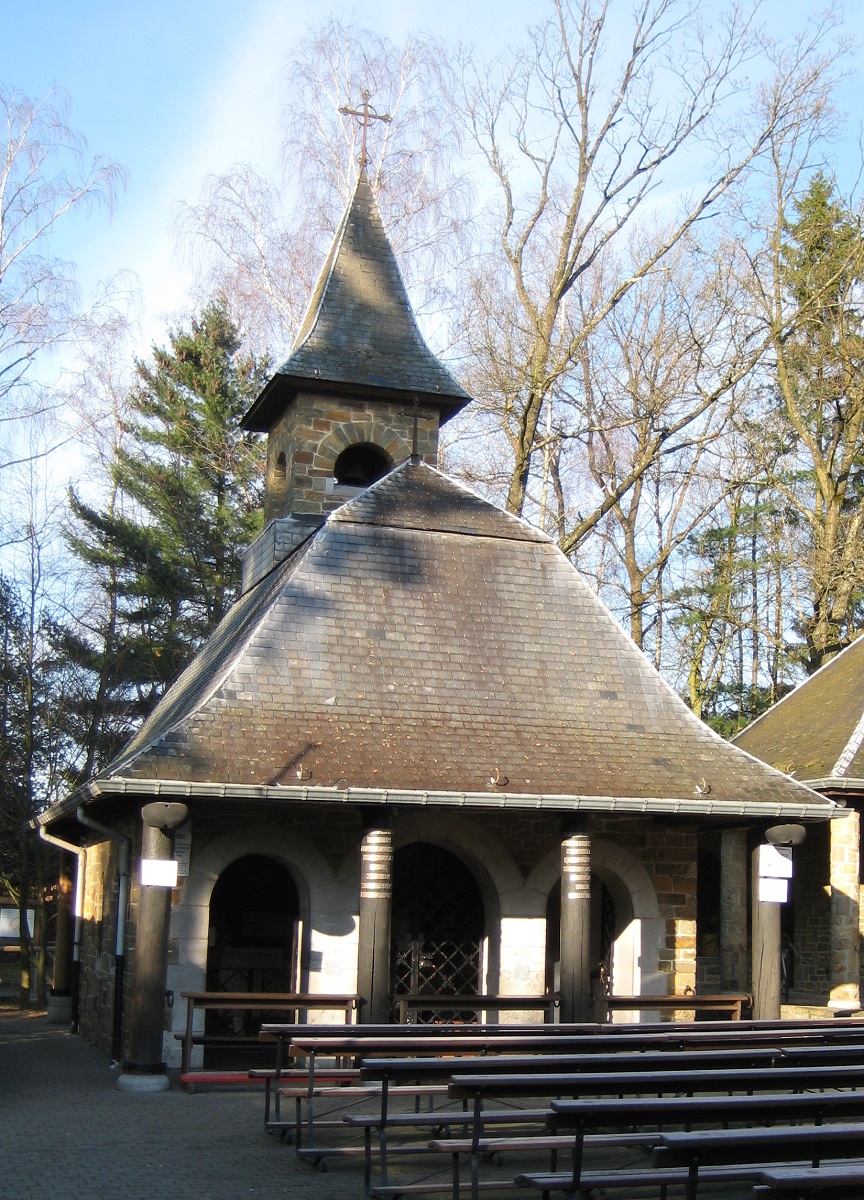
- “I would like a little chapel”[1]
- “Believe in me, I will believe in you”[1]
Primary-source file
Section titled “Primary-source file”The sanctuary chronology gives the dates, the message sequence, and the core phrases associated with Mariette Beco’s testimony.
banneux-nd.be Official recognition page Diocesan recognition historyThis page records the staged diocesan judgment in 1942, 1947, and the definitive recognition of August 22, 1949.
banneux-nd.be Official sanctuary life Current liturgies, confessions, rosary, and blessing of the sickThe current schedule shows that Banneux remains an active pilgrimage site with daily worship and ministry to pilgrims and the sick.
banneux-nd.bePublicly documented chronology
Section titled “Publicly documented chronology”The sequence of the eight apparitions
Section titled “The sequence of the eight apparitions”The official sanctuary chronology gives the Banneux case a very tight internal sequence.[1]
- On January 15, Mariette first saw the Lady in the garden by her family home, beckoning to her with a movement of the hand.[1]
- On January 18, the Lady led her toward the spring about 100 meters from the Beco house and said, “This spring is reserved for me.”[1] [2]
- On January 19, Mariette asked who she was and received the title “Virgin of the Poor,” along with the statement that the spring was for all nations and to relieve the sick.[1] [2]
- On January 20, the request came for “a little chapel.”[1] [4]
- On February 11, Mariette heard the phrase, “I come to relieve suffering.”[1]
- On February 15, the Lady answered the request for a sign with the words, “Believe in me, I will believe in you,” and entrusted a secret to Mariette.[1]
- On February 20, the emphasis returned to prayer: “My dear child, pray very much.”[1]
- On March 2, the final apparition included the identifying words, “I am the Mother of the Saviour, Mother of God. Pray very much.”[1]
Recorded details
Section titled “Recorded details”The public Banneux record on the official sanctuary site consistently centers on three elements together:
- a short, dated sequence of eight apparitions[1]
- the spring and its connection with the sick[1] [2]
- the request for a chapel at the apparition site[1] [4]
The spring page adds a concrete detail to the record by locating it near the Beco home and preserving the gesture Mariette was told to make there: to put her hands into the water even though it was freezing.[2]
The official sanctuary presentation repeatedly links Banneux to the poor, the sick, the spring, and a chapel built on the requested site within the same year as the apparitions.[1] [2] [4]
Formal diocesan recognition and shrine continuity
Section titled “Formal diocesan recognition and shrine continuity”The official recognition page records a staged diocesan process rather than a single isolated decree:
- in 1942, the reality of the apparitions was officially recognized with reservations[3]
- in 1947, that recognition was again stated with reservations[3]
- on August 22, 1949, Bishop Kerkhofs of Liège declared that the apparitions could be recognized without reserve[3]
The sanctuary’s chapel page also shows how quickly the apparition site was fixed in place. The foundation stone of the requested little chapel was laid on May 25, 1933, the plot was purchased on May 29, and the chapel and bell were blessed on August 15, 1933.[4]
The sanctuary today
Section titled “The sanctuary today”The current Banneux schedule shows that the site remains organized around a full pilgrimage rhythm. The sanctuary publicly lists:
- daily Masses during the week and multiple Sunday liturgies, including an international Mass[5]
- a daily blessing of the sick during pilgrimage season[5]
- regular confession hours, evening rosary, and daily adoration[5]
Those public schedules fit the way the sanctuary still presents Banneux: as a place of prayer, healing petitions, and Marian pilgrimage.
References
Section titled “References”- Banneux Notre-Dame. “The apparitions (1933).” Official sanctuary account of the eight apparitions to Mariette Beco, including the spring, the title “Virgin of the Poor,” and the 1949 recognition. Available at: https://banneux-nd.be/en/the-apparitions/
- Banneux Notre-Dame. “The Spring.” Official sanctuary page describing the second apparition, the location of the spring, and the statement that it is for all nations and especially the sick. Available at: https://banneux-nd.be/en/the-spring/
- Banneux Notre-Dame. “Recognition of apparitions.” Official sanctuary page summarizing the staged recognition history in 1942, 1947, and the definitive decree of August 22, 1949. Available at: https://banneux-nd.be/en/recognition-of-apparitions/
- Banneux Notre-Dame. “Chapel of the Apparitions.” Official sanctuary page giving the 1933 construction chronology of the chapel requested during the apparitions. Available at: https://banneux-nd.be/en/chapel-of-apparitions/
- Banneux Notre-Dame. “Schedule of celebrations.” Official sanctuary page listing current Masses, adoration, confessions, rosary, and blessing of the sick. Available at: https://banneux-nd.be/en/schedule-celebrations/