
The Eucharistic Miracle of Seefeld (1384)
The story in one line
a Host at Seefeld became associated with a sudden miraculous sign during Communion and started a pilgrimage tradition.
The basic story
At Seefeld in Tyrol, a knight demanding a larger Host than the common people reportedly saw the Host turn blood-red, while the stone at the altar sank beneath him. The event made St. Oswald's church one of Tyrol's great pilgrimage sites.
Historical setting
Seefeld comes out of late medieval Tyrol, where a nobleman's reported irreverent demand for Communion and the response at Mass shaped a long local devotion.

Date
1384
The Seefeld tradition ties the Host miracle to a single Mass involving Oswald Milser.
Place
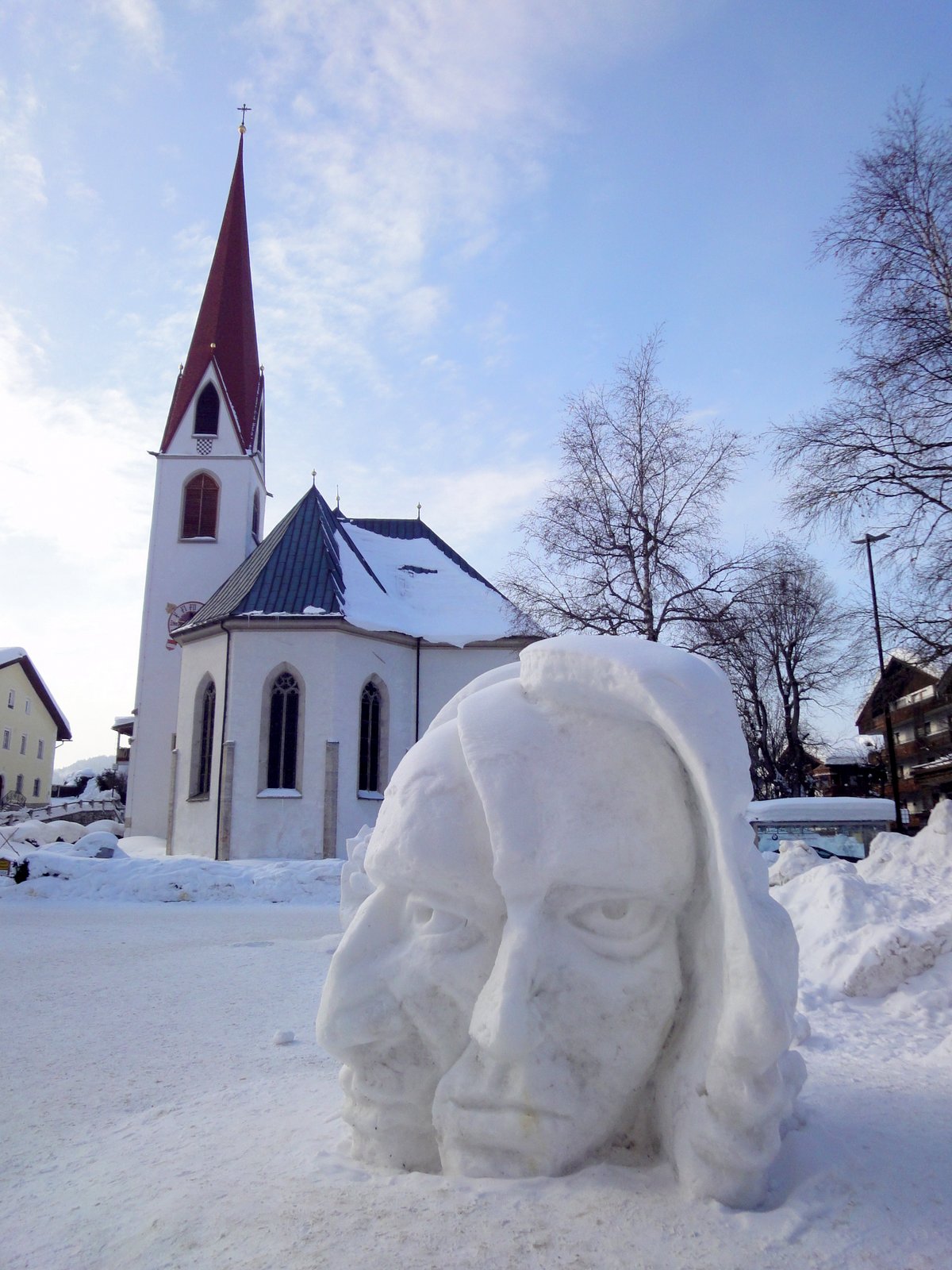
St. Oswald, Seefeld in Tyrol
The pilgrimage church and Blood Chapel preserve the memory of the event.
Physical memory
Blood Chapel and handprint at the altar stone
The official Seefeld page says the handprint remains visible.
Church growth
Expansion begun in 1425 and completed in 1474
The local source links the larger church directly to the influx of pilgrims.
The story
Section titled “The story”The Seefeld story makes most sense if you picture the social insult at the center of it. The local tradition says that in 1384 the knight Oswald Milser came to Mass, refused the ordinary-sized Host given to everyone else, and demanded a larger one as if his rank entitled him to special treatment before God.[1]
According to the local tradition:
- the priest gave him the Host[1]
- the Host turned blood-red[1]
- the stone on which he knelt and even the altar stone sank abruptly[1]
- the imprint of the hand that grasped the altar stone remained visible[1]
So the claimed miracle is a warning scene built around pride at Communion: a nobleman asks for special treatment, the Host visibly changes, the ground beneath him gives way, and the church says the handprint left in the stone can still be seen.[1]
Primary-source file
Section titled “Primary-source file”Publicly documented chronology
Section titled “Publicly documented chronology”What the record shows
Section titled “What the record shows”The important public point is not that Seefeld has a modern lab report. It is that the story left visible marks on the church’s later history:
- it transformed St. Oswald’s church into a pilgrimage site in Tyrol[1]
- it led to later expansion of the church because of the influx of pilgrims[1]
The cited regional page ties the 1384 Mass story directly to the pilgrimage history that followed.[1]
The official Seefeld page also ties the miracle very directly to the building history of the church:
- St. Oswald’s church is first documented in 1263[1]
- after the 1384 Host miracle, the church became a pilgrimage site in Tyrol[1]
- because of the influx of pilgrims, the church was expanded beginning in 1425 and completed in 1474[1]
- the adjoining Blood Chapel became the place where the wonder-host was kept[1]
What pilgrims still see
Section titled “What pilgrims still see”The Seefeld page says pilgrims can still be shown two physical reminders of the story: the handprint at the altar stone and the adjoining Blood Chapel, where the wonder-host was later kept.[1] In other words, the event is remembered there not only as a story from 1384 but as something built into the church’s layout.
References
Section titled “References”- Region Seefeld. “St. Oswald Parish Church.” Official regional page describing the 1384 Host miracle, Oswald Milser’s demand for a larger Host, the Host turning blood-red, the sinking stone, and the later rise of Seefeld as a major pilgrimage destination. Available at: https://www.seefeld.com/en/a-st-oswald-parish-church