
The Holy House of Loreto
The story in one line
the Holy House at Loreto is the house of Mary from Nazareth, brought to Italy by miraculous or divinely guided translation.
The basic story
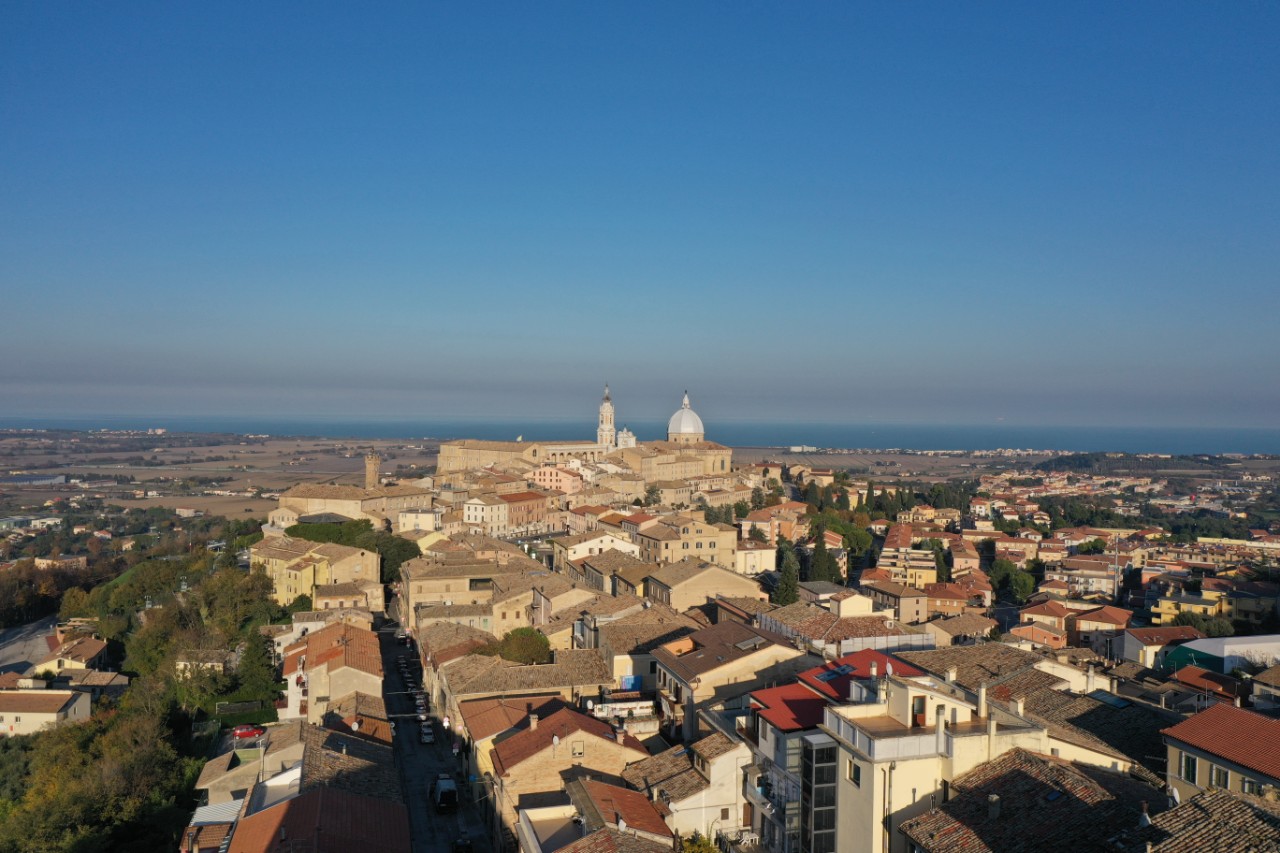
The Pontifical Shrine of Loreto preserves the Holy House traditionally identified as the house of Mary from Nazareth. The shrine itself presents both the ancient angelic-translation tradition and a historical hypothesis that Christians transported the house during the Crusader era.
Historical setting
Loreto belongs to the medieval Mediterranean world after the Crusades, where the Holy House tradition took shape around the claim that Mary's house was brought west from Nazareth.
Claim
Holy House identified with Nazareth tradition
The shrine says the three walls correspond to the house in front of the grotto of Nazareth.
Translation dates
1291 to Illyria, 1294 to Loreto
These dates appear in the official sanctuary history.
Current status
Pontifical sanctuary and active liturgical center
Mass continues to be celebrated from inside the Holy House.
Public file
Tradition + archaeology + continuous shrine life
Loreto is presented as both a devotional tradition and a debated historical transport case.
The story at Loreto
Section titled “The story at Loreto”Loreto preserves a small stone structure that the shrine identifies with the house of Mary in Nazareth — the house linked in Christian memory with the Annunciation.[1]
According to the sanctuary’s own history page, that house left the Holy Land in stages. It first arrived on the eastern side of the Adriatic in 1291, then reached the Loreto area in 1294 after the Crusader states were collapsing.[1]
So Loreto is not centered on a healing or a sudden visible sign. It is the story of a building: did the house reach Italy by angelic intervention, as the older tradition says, or by human transport under divine protection, as the shrine’s historical explanation now also allows?[1]
Primary-source file
Section titled “Primary-source file”The shrine presents both the angelic-translation tradition and the human-transport hypothesis, along with its main archaeological arguments.
santuarioloreto.va Official sanctuary guide Guide page on the Holy HouseThe guide page gives the sanctuary’s fuller narrative of the stops between Nazareth, Illyria, and Loreto.
santuarioloreto.va Official live liturgy page Streaming and Mass from inside the Holy HouseThe live page confirms that Mass is still celebrated from inside the Holy House and broadcast worldwide.
santuarioloreto.vaPublicly documented chronology
Section titled “Publicly documented chronology”Tradition and historical hypothesis
Section titled “Tradition and historical hypothesis”Loreto is unusual because the shrine itself openly says there are two ways people have understood the story.
- In the older tradition, the house was carried by angels from Nazareth to safety.[1]
- In the historical explanation the shrine now also presents, the house was moved by Christians during the Crusader period, while the angel language expresses divine protection and guidance rather than literal winged transport.[1]
The sanctuary adds that Pius IX described the house as having been transported “by divine will.”[1] In plain terms, Loreto’s official presentation now says: maybe the house was moved by miracle, maybe it was moved by people, but in either case the shrine sees the house’s preservation as part of God’s providence.
Why people still point to Loreto
Section titled “Why people still point to Loreto”The official Loreto presentation highlights several physical features that, in the shrine’s view, make the house unusual:
- the house at Loreto does not sit on ordinary built foundations of the kind local builders would normally use[1]
- the lower stones are said to fit better with materials known from Nazareth than with local Loreto stone[1]
- the graffiti and stone finishing are presented as looking more Palestinian than central Italian[1]
- the three-wall layout is said to fit the old Nazareth grotto more naturally than a house planned for that hill in Italy[1]
Those points are why Loreto did not remain only a pious tale told in books. People who point to the house point to a real structure, real stones, and a shrine history that has continued for centuries.
Loreto as a living shrine
Section titled “Loreto as a living shrine”The official sanctuary also presents Loreto not as a museum object behind glass, but as a place still used for worship. Its live-broadcast page says Mass is still celebrated inside the Holy House and streamed worldwide, with the interior visible online during much of the day.[2]
Whatever explanation a reader favors, Loreto remains a living place of prayer, pilgrimage, and worship. The house is not only an old structure inside a basilica; it is still treated as a holy place in daily use, which is why the story around it has remained so alive.
References
Section titled “References”- Pontifical Shrine of the Holy House of Loreto. “The Holy House from Nazareth to Loreto.” Official shrine history presenting the translation tradition, the human-transport hypothesis, and the archaeological arguments emphasized by the sanctuary. Available at: https://www.santuarioloreto.va/en/storia/la-santa-casa-da-nazareth-a-loreto.html
- Pontifical Sanctuary of the Holy House of Loreto. “Diretta tv.” Official sanctuary page describing the daily live stream from the Holy House and the wider sanctuary celebrations. Available at: https://www.santuarioloreto.va/en/diretta-tv.html
- Pontifical Shrine of the Holy House of Loreto. “La Santa Casa.” Official sanctuary guide page recounting the Nazareth, Tersatto, and Loreto stages of the traditional translation narrative. Available at: https://www.santuarioloreto.va/it/storia/guida-alla-basilica/la-santa-casa.html